Every major landmark in Jaipur, mapped with the street food stalls actually worth a stop on the way.
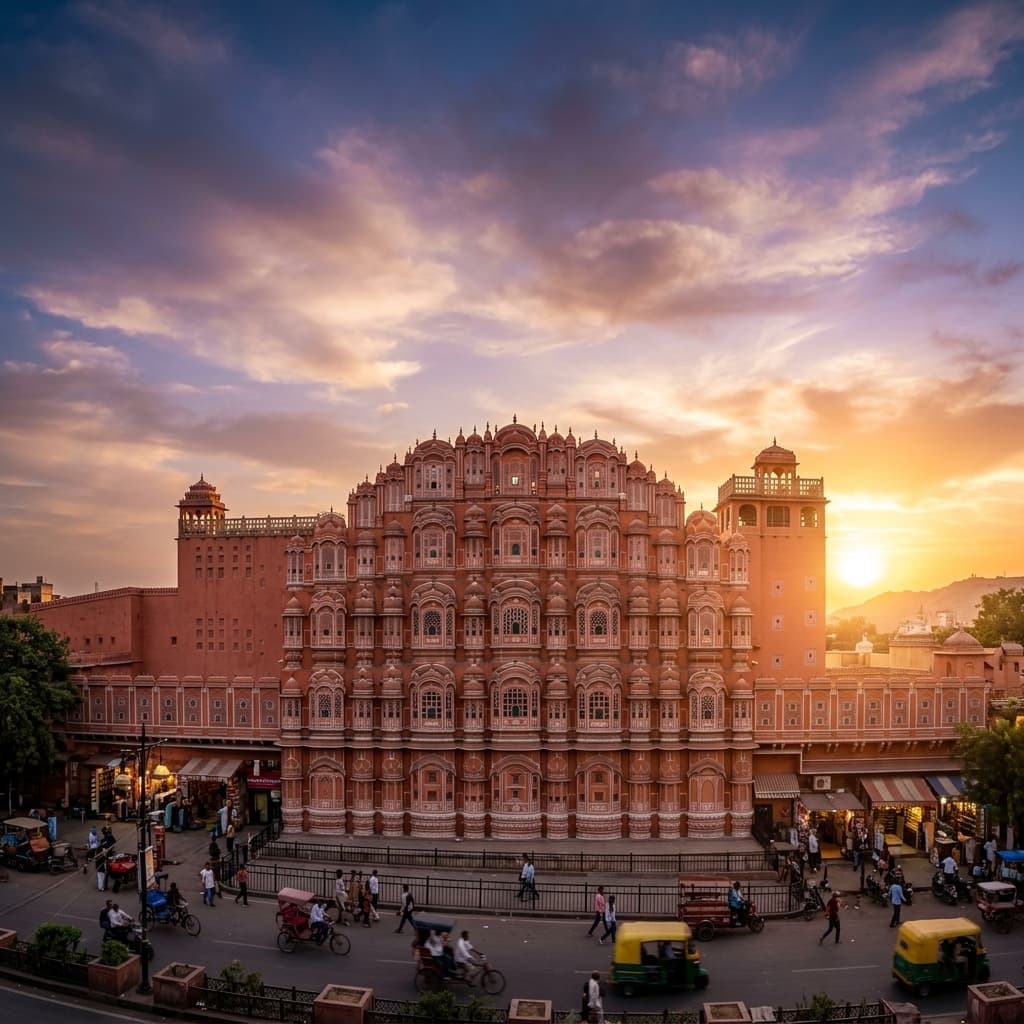
That honeycomb wall you've seen in a hundred Jaipur photos? It's basically a five-storey screen, built in 1799 so royal women could watch street festivals below without being seen from outside - most visitors shoot it from across the road and never actually go in.
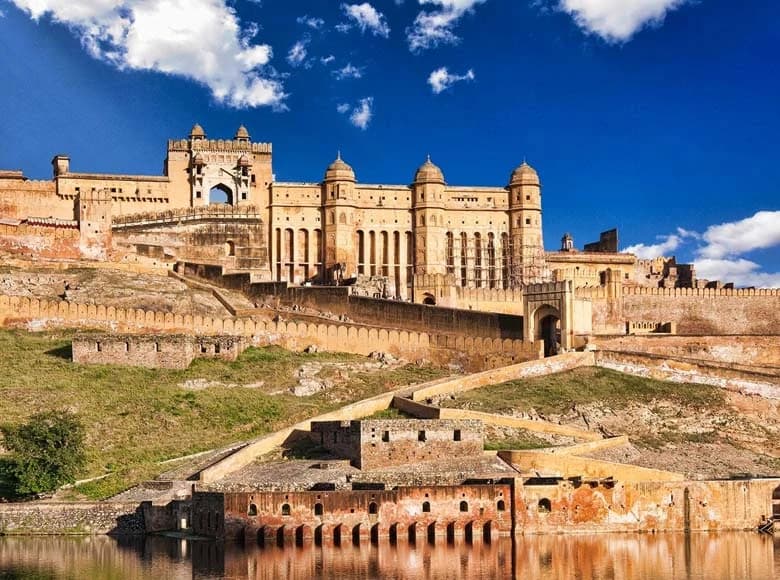
Amer Fort's real party trick is the Sheesh Mahal - a hall lined with mirror-work so fine that one lit candle inside used to light up the whole room like a thousand stars. Construction started in 1592, before Jaipur city even existed, and the climb up from Maota Lake is steep enough that jeeps still do the run for anyone who'd rather not walk it.
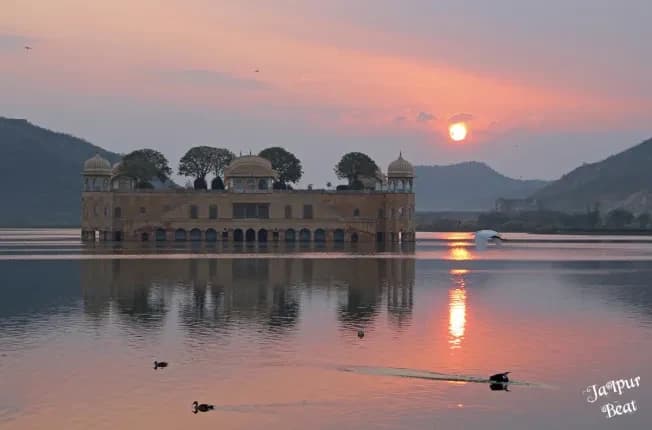
You can't actually go inside Jal Mahal - that's the whole point. It's a 1750s duck-hunting lodge sitting in the middle of Man Sagar Lake with four of its five floors underwater, so the experience is standing on the promenade and watching it float there while the sky turns orange.
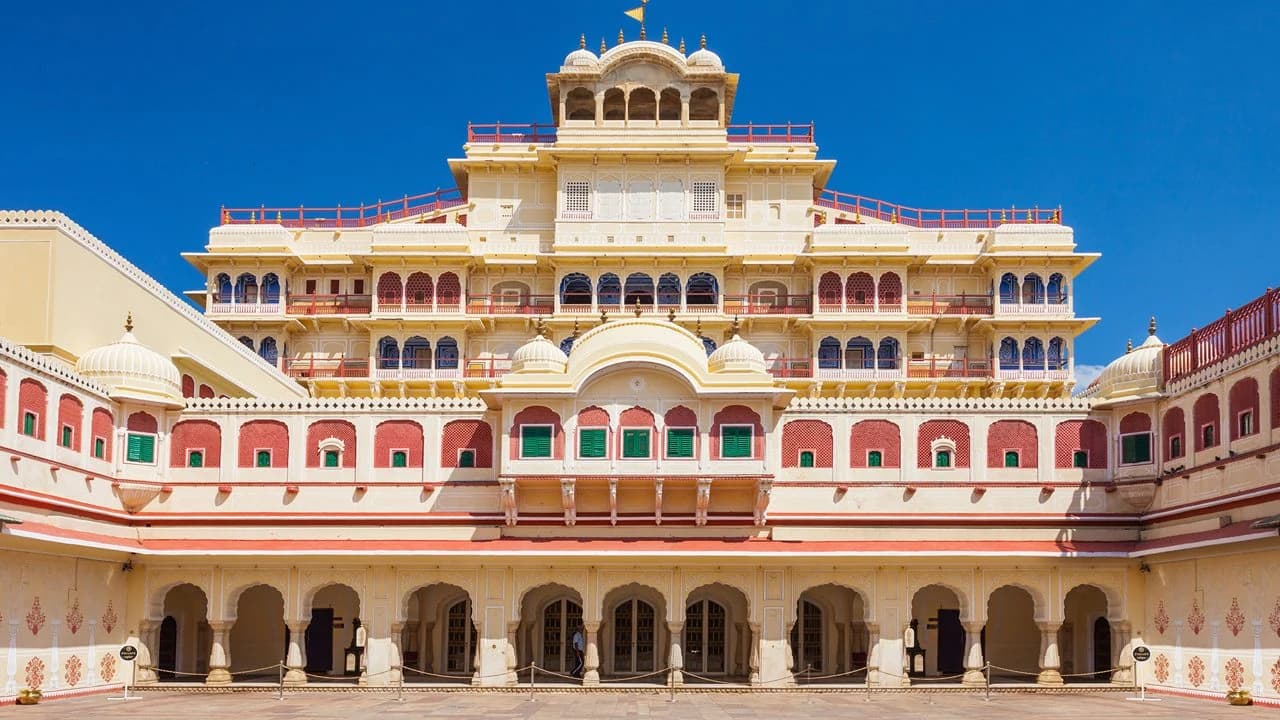
Part of City Palace is still home to Jaipur's royal family today - rare for a monument you can just buy a ticket to. Don't rush past Pitam Niwas Chowk: its four gates are each painted for a different season, and the Diwan-i-Khas hall holds two silver urns big enough to hold a Guinness World Record for largest silver vessels.
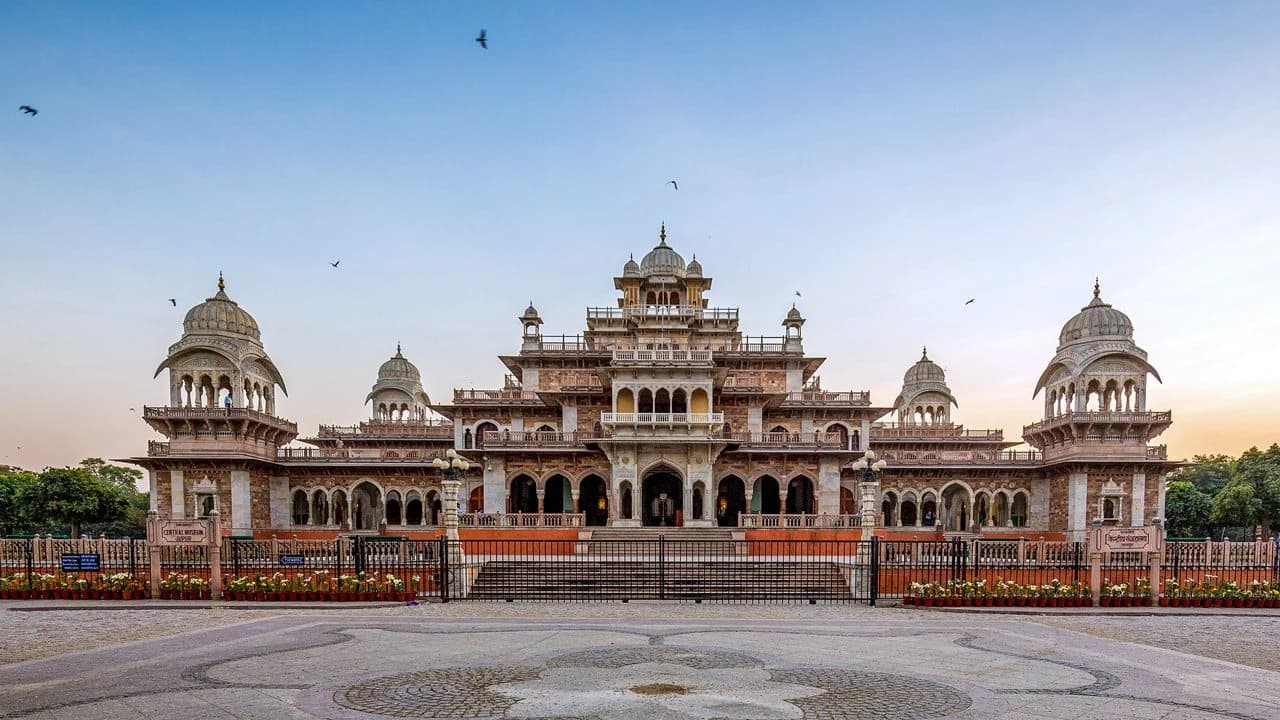
Rajasthan's oldest museum has a genuine 2,300-year-old Egyptian mummy in a glass case - not a replica - tucked among 19,000 other artefacts inside a building that looks like a wedding cake carved from red sandstone. Worth going twice: once by day for the exhibits, once after dark to see the whole building lit up gold.
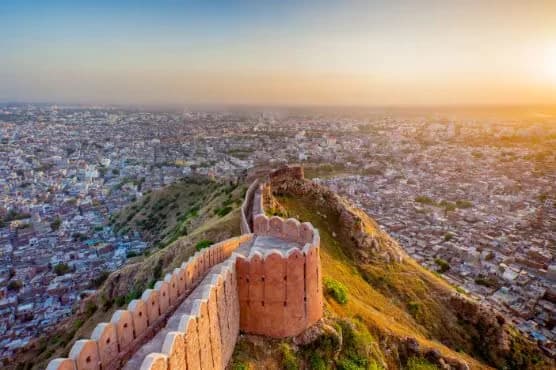
Nahargarh means 'Abode of Tigers' - it was first named Sudarshangarh, then renamed after locals blamed a restless spirit for repeated construction troubles. Along with Amer and Jaigarh, it once relayed signals as part of the same defence line, and today that same hilltop is where half of Jaipur shows up right before sunset to watch the Pink City go gold at once.
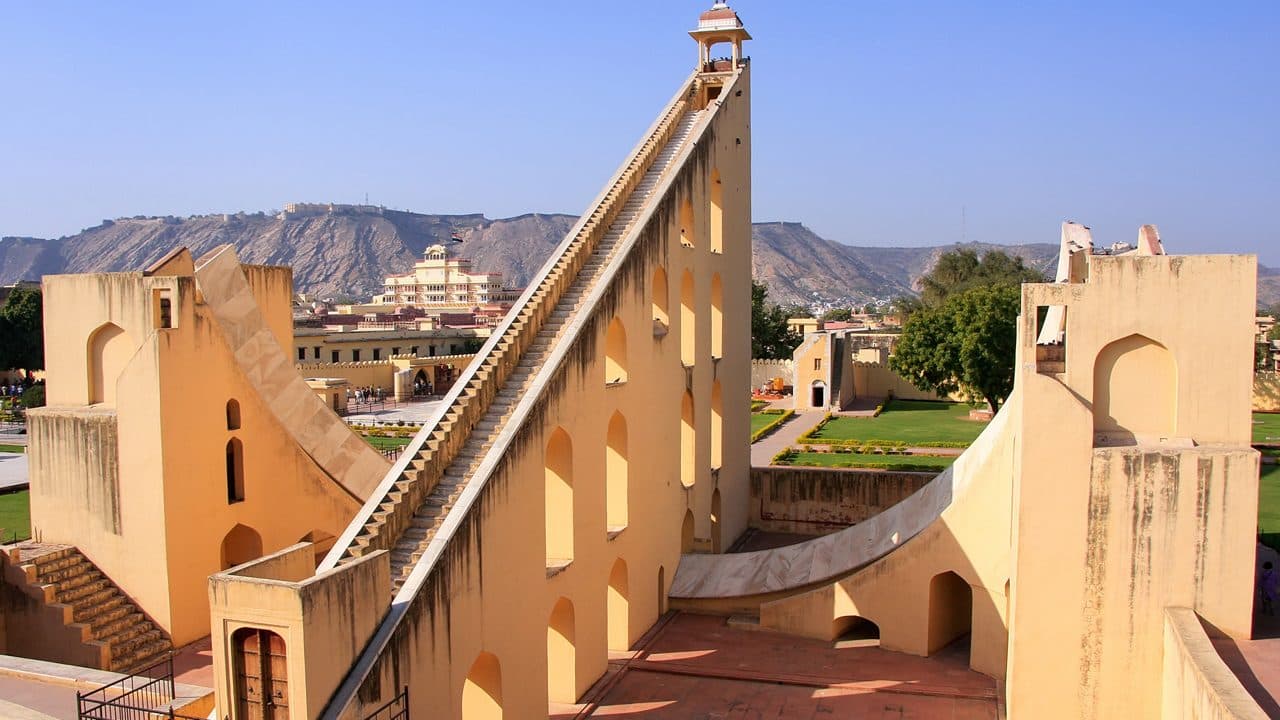
The giant sundial here - Samrat Yantra - is accurate to about 2 seconds, and it's not a replica; it's the actual 1734 instrument still doing its job. Nineteen of these stone-and-marble machines fill the courtyard, each built to track something different - eclipses, star positions, the sun's exact path - without a single gear or battery.
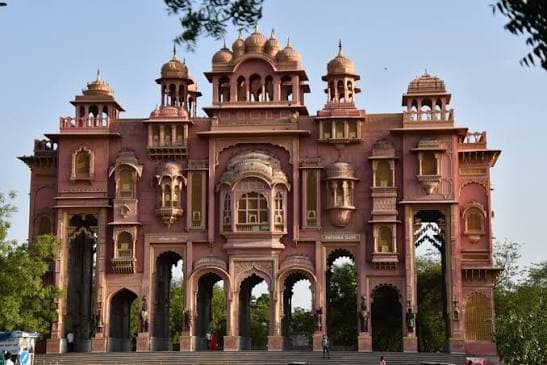
Patrika Gate is a vividly painted, modern gateway at Jawahar Circle Garden, built in 2016 and inspired by traditional Rajasthani architecture - one of Jaipur's most photographed spots.
Know a hidden food spot near these places?
Tell us where and our team will check it out.

Raja Park
6+ Spots
Chaura Rasta
5+ Spots
Badi Chaupad
4+ Spots
Chandpole
Chhoti Chaupad
Gangauri Bazaar
View All Areas